[Must-Read for E-Commerce Professionals] What Is the KSF (Key Success Factor) for Succeeding in Digital Sales?
For retail companies and brands, online product sales are becoming an increasingly important part of the business. To succeed in online product sales, which metrics should you track? In this article, we introduce the key success factors (KSFs) for business success in digital sales.
What is KSF (Key Success Factor)?
KSF stands for Key Success Factor, and in Japanese it is translated as important success factor. It refers to what is needed to make a business successful. Setting KSFs helps respond to diversified needs and develop effective strategies.
This is similar to terms such as KGI and KPI, but the differences are as follows.
・Difference between KSF and KGI
KGI (Key Goal Indicator) is an abbreviation for important goal achievement indicator and is a metric that quantifies the goal to be achieved. KPI and KSF are metrics needed to achieve the KGI.
・Difference between KSF and KPI
KPI (Key Performance Indicator) is an abbreviation for important performance indicator and is set as a specific numerical metric that must be reached in order to achieve the KGI. The metric obtained by quantifying KSF becomes KPI.
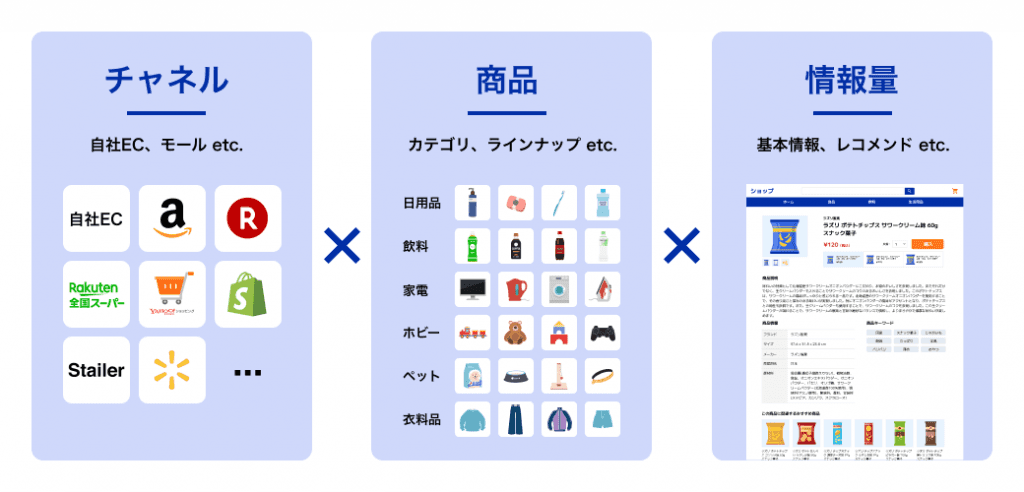
In digital sales, KSF = number of channels × number of products × amount of information
◉ Changes in trends in digital sales
With the spread of the internet, it has become possible to sell not only in physical stores but also through a variety of digital channels. Along with the spread of online purchasing and delivery due to COVID-19, the number of customers buying digitally is also becoming more noticeable.
Now, companies with physical stores are increasingly being expected to support online sales as a matter of course.
While competing with companies that already support online sales, what will be the key indicators for staying ahead?
◉ KSF in digital sales
The following three elements are cited as necessary to succeed in digital sales.
・Number of channels
As customer needs diversify, the number of channels in the market is also increasing. In other words, customers exist on every channel. The more of these channels you cover, the more customers you can reach.
For example, this includes launching your own EC site as well as major malls such as Amazon and Rakuten.
・Number of products
As online sales become the norm, what customers seek from online sales also increases. What used to be demand for products such as heavy PET-bottle drinks and home appliances has shifted to a broader range of categories and product lineups, including daily necessities and food. Increasing the number of items handled and creating a seamless experience where customers can buy what they want when they want it also leads to an increase in the number of purchases per customer.
・Amount of information
Even if you open stores on each channel and increase the number of items handled, customers cannot judge whether they should really buy the product if there is no information on the product page. Filling product pages with basic information such as product names, weight, specifications, and product descriptions, as well as keywords that describe product features, affects customers' purchase intentions. In addition, improving the accuracy of recommended products also helps customers decide to purchase PB (private brand) products.
Examples of companies working on these KSFs
◉ Domestic
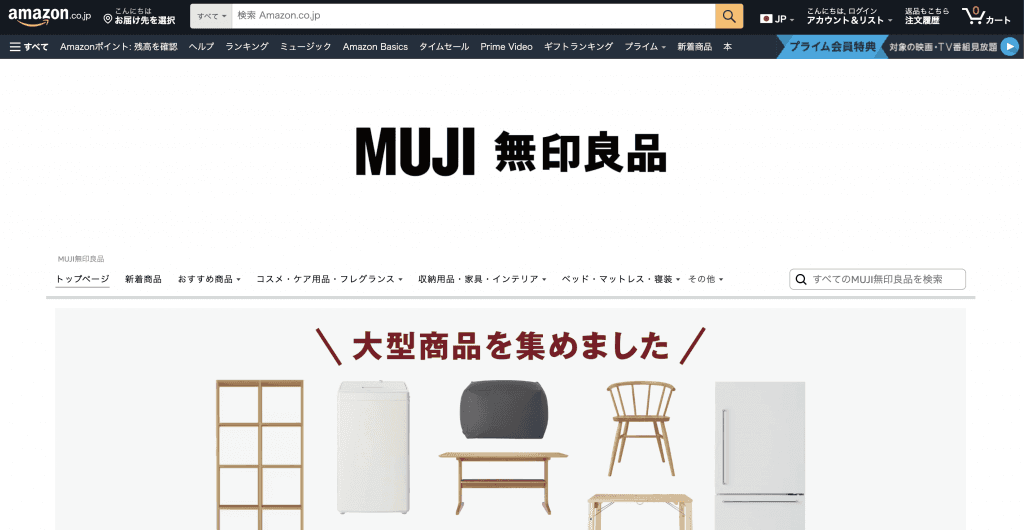
MUJI
MUJI opened its official online store, MUJI Net Store, in 2000 and has been taking on many initiatives that could be seen as a precursor to O2O. Among them, it opened stores on Amazon in May 2020 and on Rakuten in June 2020. Demand expansion due to the COVID-19 impact also provided a tailwind, and EC sales for the fiscal year ending August 2020 were 37.9% year-on-year higher, reaching 16.189 billion yen, showing an increase in sales from channel expansion.
Bic Camera
Bic Camera launched its internet shopping site BicCamera.com in October 2003 and opened a store on Amazon in June 2012. In addition, in April 2018, it began operating Rakuten Bic to meet customers' diverse needs, including the integration of online and offline channels. Through such channel expansion and coordination between online and physical stores, EC sales have improved.
◉ Overseas
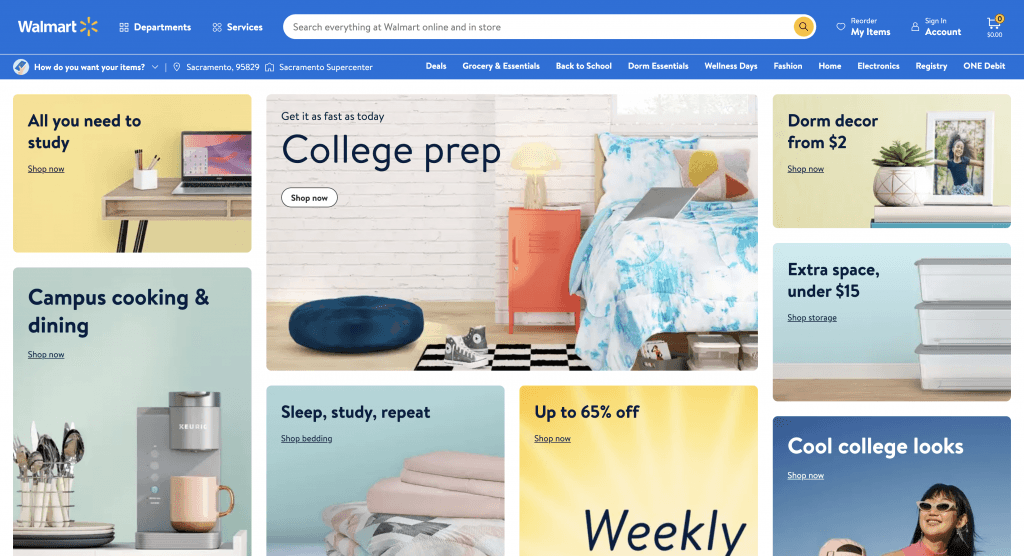
Walmart
Walmart, known as the world's largest retail company, launched its online shop in 2000. The company expanded through acquisitions ranging from brands such as Moosejaw and Bonobos to Flipkart, India's largest online retailer, revamped its website design, and found categories where it could win online. Walmart's online product assortment exceeded 43 million items as of 2018.
Recent data shows that Walmart's online sales have grown significantly over the past few years, and its online sales revenue (including e-commerce sales from Sam's Club, its wholesale division) recorded $25.1 billion in fiscal 2019. Walmart's online sales increased to $39.7 billion in 2020 and further increased to $64.9 billion the following year, and sales continue to grow year by year.
Home Depot
Home Depot, one of the largest home improvement chains in the United States, saw online sales in the fourth quarter of the fiscal year ended January 29 increase by 4.0% year-on-year. Total sales also increased to $35.83 billion, a slight increase of 0.3% from $35.71 billion in the same period the previous year. Even Home Depot, which sells products suited for physical stores, has increased sales by becoming online-ready and smoothing the boundary between online and offline.
Summary
Companies that have pioneered store digitalization are steadily increasing sales. Although there are various costs involved, as shown in the examples, in an era where digitalization will continue to advance, switching to digital will become essential for companies like these.
By making the most of existing physical stores while also advancing the shift to digital, companies may be able to survive amid intense industry volatility.
Lazuli develops and provides Lazuli PDP, which makes it possible to process and expand product information needed when launching and operating EC sites. If you are thinking about launching an EC site or are interested, please contact us from here.
Lazuli PDP service site: https://corporate.lazuli.ninja/