
Shoptalk Europe & NRF APAC Debrief Event Report
A three-part event report introducing the latest retail trends and data and AI utilization strategies. It features concrete examples and strategies explained by experts.
This report summarizes the content of the Shoptalk Europe & NRF APAC debriefing held on June 24, 2024. It highlights the latest retail trends and data/AI utilization strategies for Japan's distribution and retail industries, along with the highlights from each session.
Shoptalk Europe Report: Latest Retail Trends in the EU
Daijiro Ban, Executive Specialist at Yappli Inc., introduced the latest retail trends in the EU. As in the U.S., conventional funnel-based marketing is breaking down in the EU as well, and the shift toward unified commerce is advancing. Examples of retail transformation centered on four points were presented.
・Generative AI utilization
・Next-generation customer journey
・Rethinking brand power
・Unified commerce
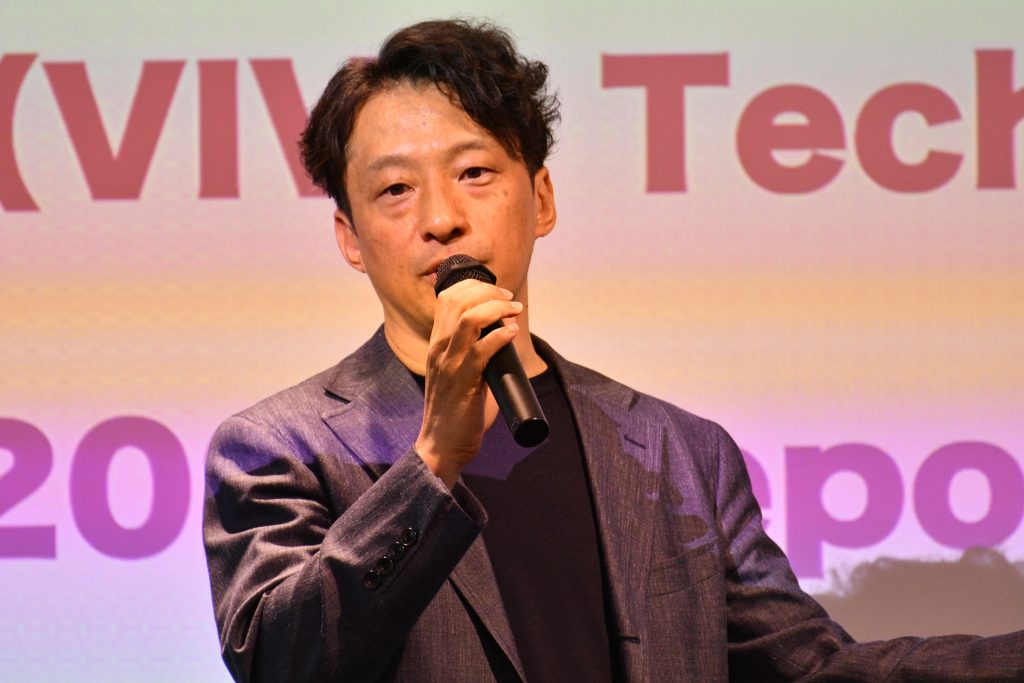
Among several generative AI examples, Walmart is rolling out new services such as "Shop with Friends," which lets users share the shopping experience with friends in virtual spaces.
Also, with the arrival of generative AI, shifting from keyword search to search based on the job to be solved makes it possible to collect data by purchase intent, expand the range of product recommendations, and dramatically improve the customer experience.
At the cosmetics brand L'Oréal, customer shopping experiences are being enhanced by using virtual experiences that bring customers' ideal cosmetics to life in real time and personalized AI agents. In stores, they have also introduced a system that measures customers' skin condition in real time and immediately uses that information in customer service, thereby increasing customer satisfaction.
At Shoptalk Europe, the emphasis was placed not simply on online and offline purchasing channels, but on transformation toward unified commerce, with consistent improvement of the customer experience centered on product data, customer data, and generative AI being highlighted. We were introduced to many case studies that can only be learned about here, including STANLEY, WAITROS, and JOHN LEWIS.
It was noted that the trend going forward will be to provide a brand-consistent, personalized, and emotional shopping experience, not just functional points such as coupons and campaigns.
NRF APAC Report: Latest Retail Trends in the APAC Region
In a discussion on the latest retail trends in the APAC region, Shun Iba, Representative Director of IBA Company Co., Ltd., Takuto Hayashi, board member of the Retail AI Study Group, and Hideo Kitashoji, Executive Officer of Lazuli Inc., took part. NRF APAC was held for the first time in Asia, with 7,000 people registered overall, of whom about 400 were Japanese. It was also Lazuli Inc.'s first overseas exhibition, and the company launched a Japanese community on Facebook and provided a place on-site for both learning and sharing, which was well received by participants.
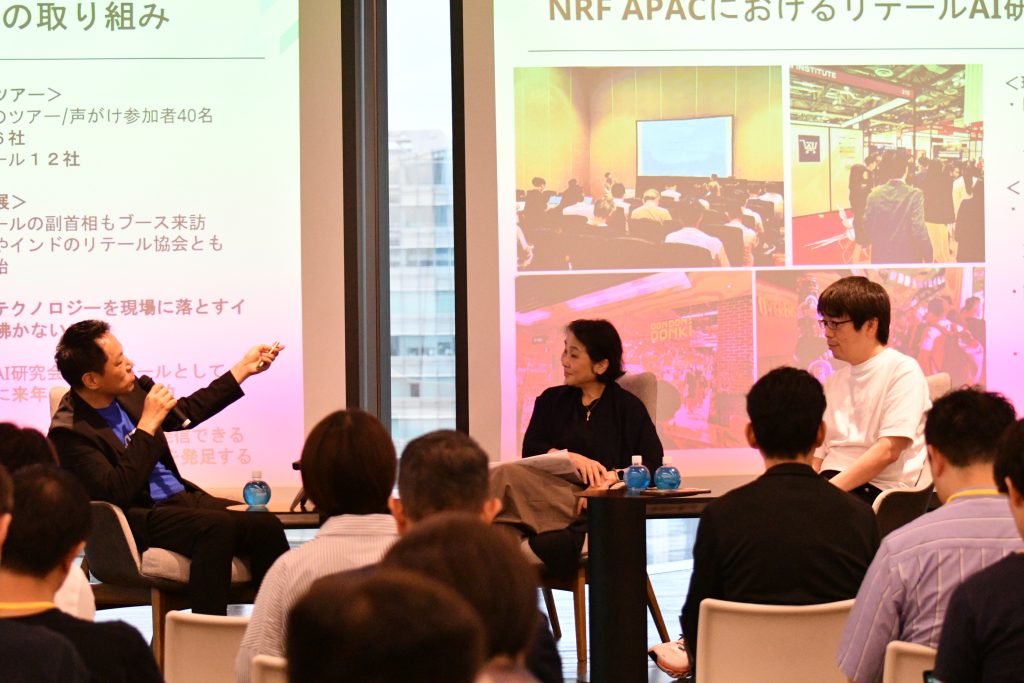
It was also reflected that while the on-site inspection tour organized by the Retail AI Study Group was lively and energizing, a challenge was that participants could not quite picture how to put the introduced AI and technologies into practice in the field.
In the impressive session by AEON Co., Ltd., it was introduced that AEON owns 17,000 stores, 99% of which generate sales from physical stores, and that under the LIFE TECH concept with the theme "Warm Colorful Experience,"
・Centralization of customer information
・Customer digital twin
・In-house analytics
・Integration of the customer value delivery process
are being promoted company-wide. By emphasizing emotional connections with customers and leveraging digital technology, AEON is improving personalized customer experiences.
In addition, Simon Miles of Coca-Cola explained trends in retail media. Retail media is said to be advancing in: 1) in-store placement, 2) connected TV, and 3) insourcing. Since 80% to 90% of consumers purchase in physical stores, in-store experiences such as digital screens, Scan&Go, and self-checkout are being emphasized.
The key point is to focus on things that help improve consumers' lives. On that basis, it was concluded that trust between companies is important for realizing true collaboration that enables win-win-win outcomes, with all parties—brands, retailers, and internal departments—working together, deepening clear understanding, and building capabilities and functions.
For many Japanese retailers, data utilization that combines customer data and product data is still in its early stages. To grasp customer values in real time, manufacturers and retailers are required to build stronger relationships than ever before and share and organize data across the value chain. Lazuli provides Lazuli PDP, a product data platform that uses AI for the distribution industry, and is working to promote data utilization among companies. Adoption is already progressing at major companies such as Beisia, Asahi Breweries, and Nitori. The company also aims to work flexibly with "J-MORA," led by the Retail AI Study Group, to create a market for product data that can be used across the industry.
What data and AI utilization strategies should Japan's distribution and retail industries pursue?
In a session with Tomohiro Sekiguchi, President and CEO of BrainPad Inc., which supports corporate data utilization, and Hagiwara, Representative Director of Lazuli Inc., a discussion was held on the data and AI utilization strategies that Japan's distribution and retail industries should pursue. In Japan, only 15% of data is currently analyzable, and only 3% is actually used for analysis. As a result, Japan ranks last internationally in big data utilization and analytics, indicating that it is significantly lagging behind.
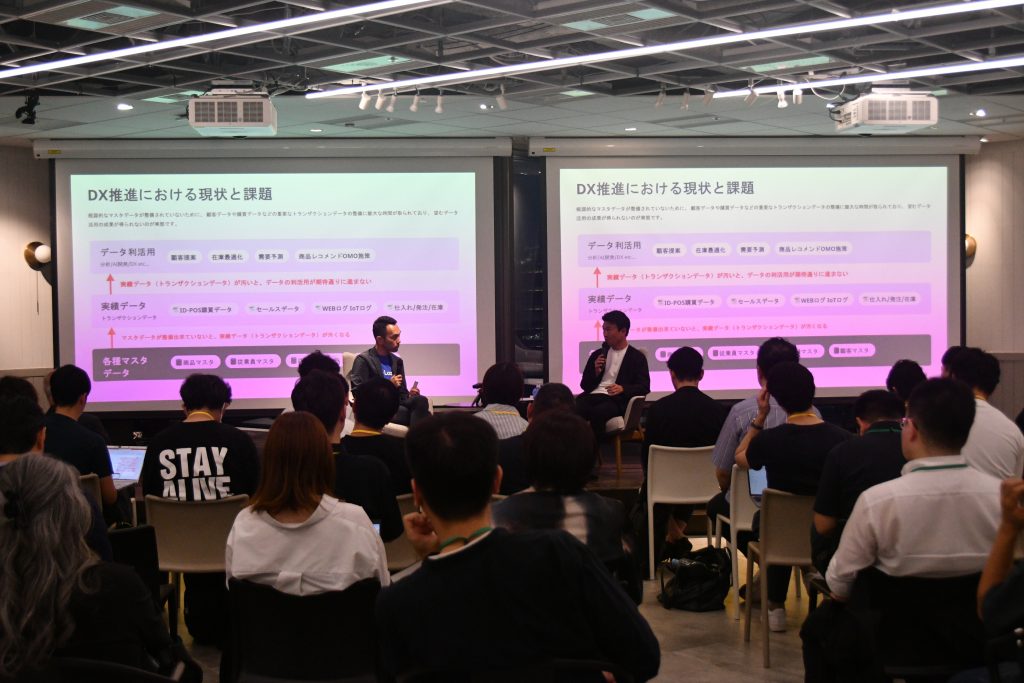
The current state of data and AI utilization was discussed from two perspectives: marketing and supply chain. It was also noted that the background behind the slow progress of data utilization and DX promotion in Japan is the time required to prepare the underlying data to be used.
In Japan, investment in CRM still remains lower than advertising spending, but it was said that going forward, companies will likely return to preparing both customer data and product data and to realizing meaningful data utilization.
It was also emphasized that, in a diversifying market, delivering the optimal experience for customers requires the entire organization—from marketing to the supply chain—to work together on "demand chain management."
It was suggested that companies should spend less on preparing internal data and instead use cloud services like Lazuli PDP to integrate data and generate product data according to use cases, while relying on data analysis professionals like BrainPad to focus on extracting insights that lead to profit and executing measures.
Regarding generative AI utilization, companies in Europe and the U.S. clearly state their stance on AI ethics and usage, making it clear what should and should not be done with AI. In Japan, however, ethical concerns and hallucination issues mean that use at customer touchpoints is still approached cautiously. Still, there was discussion that this could be solved with small improvements, such as adding a checkbox to obtain customer consent in advance, or that rather than replacing human work, its smoother introduction might come from using it in areas that have been beyond human capacity until now, such as the enormous amount of research in product development.
Summary
At the Shoptalk Europe & NRF APAC debriefing, the latest retail trends and data/AI utilization strategies were presented. At Shoptalk Europe, the evolution of unified commerce powered by generative AI was emphasized, with concrete examples from many companies and brands, including Walmart and L'Oréal. At NRF APAC, AEON's initiatives and retail media trends were discussed, offering important insights for Japan's retail industry as well. As a pioneer in product data platforms, Lazuli PDP is expected to play an active role in the future practice of "customer data × product data" and contribute to industry-wide product data integration and AI utilization.