What Is “Product Data” That Panasonic, Which Values Ongoing Connections with Customers, Is Focusing On? – Lazuli Executive Salon Vol. 4 Event Report
On November 13, 2024, Lazuli hosted the executive event “Lazuli Executive Salon Vol. 4,” featuring as speakers Mr. Kenji Yoshimoto, Manager of the Data Management and Operations Section and Head of Data Management, DX Planning Department, PX Driven Center, Consumer Marketing Japan Headquarters at Panasonic Corporation (hereinafter, Panasonic); Mr. Ryo Yamashita, Digital Lead, DX Planning Department, PX Driven Center, Consumer Marketing Japan Headquarters at the same company; and Mr. Kosuke Hamano, Director of Classmethod, Inc. and CEO of Prismatics Inc. The theme was “What is ‘product data,’ which Panasonic is focusing on as it places importance on continuous connections with customers?”
We gathered people from companies in Japan’s major manufacturers, brands, and retailers who are working on marketing/CX improvements using data and AI, and discussed ideas for customer experience and data strategies using product data and customer data in Japan’s home appliance business, with a focus on what manufacturers and brands should do to keep connecting with customers.
Using Product Data to Achieve Ongoing Connections
Using Product Data at Panasonic to Improve CV
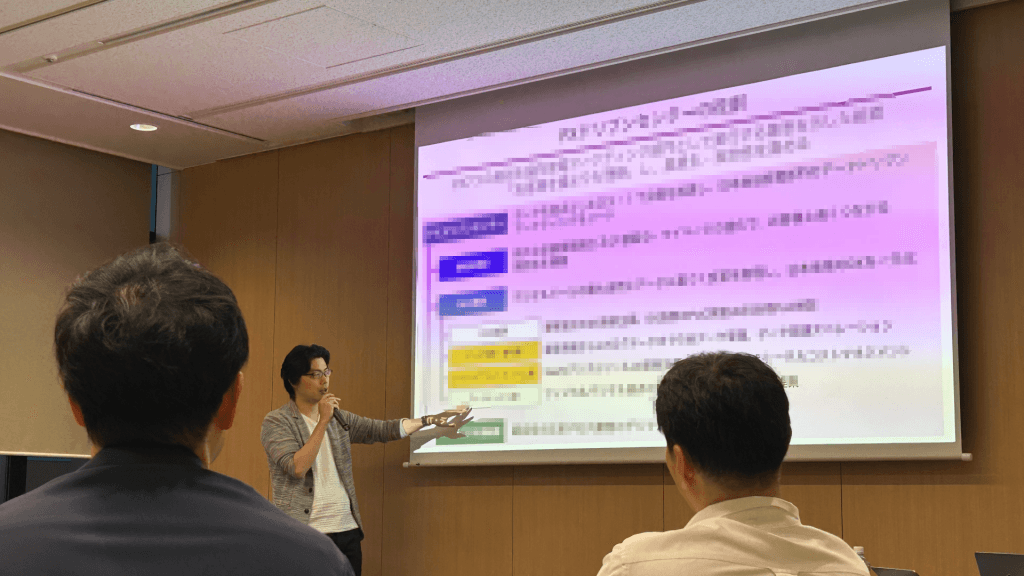
Panasonic offers a wide range of products, with “100 categories and 10,000 model numbers,” to meet consumers’ diverse needs. However, the purchase frequency of home appliances such as refrigerators and washing machines is limited, and contact with customers is not frequent. Therefore, in addition to improving product value, Panasonic places importance on enhancing customer experience value and providing overall satisfaction, with the goal of becoming a company that customers keep choosing, “Panasonic again.” At Panasonic, to better understand customers, the company is collecting, organizing, and using three types of data: customer attribute data, behavioral data, and product data.
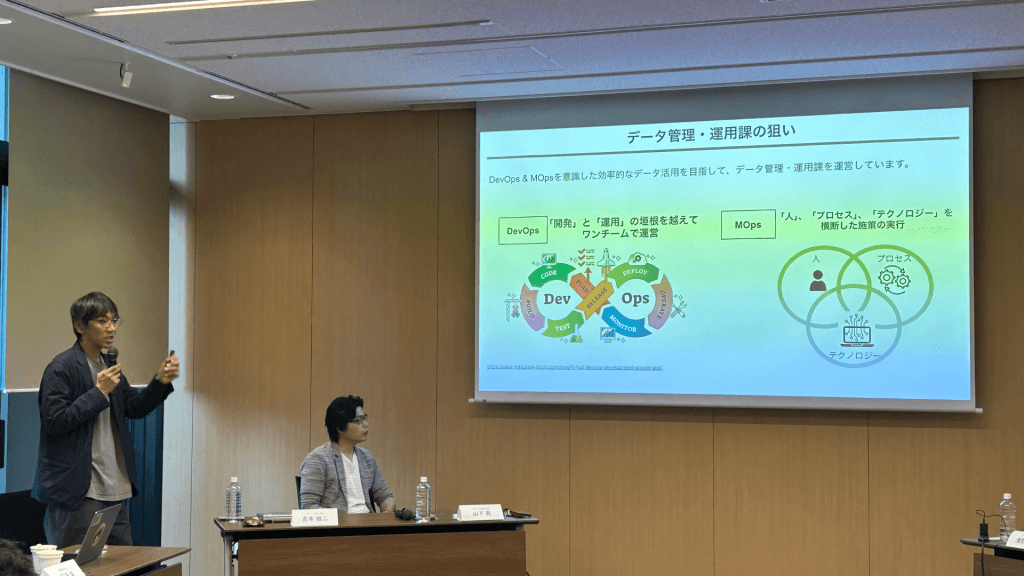
There are three major points regarding initiatives related to product data.
First is the integration of product data and the enrichment of metadata. Until now, product data had been dispersed across multiple locations, making accurate information unclear. To address this, Panasonic introduced Lazuli PDP and is mechanically collecting and aggregating data to create master data that can be analyzed. In addition, it is expanding metadata such as categories, product features, and related products to support AI utilization and advanced analysis.
Next is the organization of URL data for product pages. At Panasonic, which product is listed on which page of the EC site is managed because the model number is linked to the URL, but it was not possible to manage which page contains articles about each product. Currently, efforts are underway to master these article page URLs as well.
Finally, there is the addition of feature tags and the use of behavioral data. Panasonic aims to attach feature tags to products so that site search can narrow products by conditions such as “for families.” It also discussed combining browsing data, behavioral data, and customer attributes to accurately understand customer interests and build a system that provides optimal information.
What Does a Continuous Connection with Customers Look Like from Overseas Examples
Next, Mr. Hamano from Classmethod introduced overseas examples of how to maintain continuous connections with customers.
According to a framework provided by Kokyaku Jikan Co., Ltd., Mr. Hamano said that the value of staying connected has a pyramid structure: “functional value” at the base, “experience value” above it, and “connected value” at the top.
He also said that mobile apps and EC have become communication venues just like physical stores, but if there is no value in staying connected from the customer’s perspective, it will not lead to sales. As an example of making customers feel the value of staying connected, he introduced a loyalty program example from Nordstrom, a department store in New York, where purchases earn not only simple price benefits (Reward) but also privileges (Priority) (for example, offering dining or spa experiences to credit card members).
Challenges in Using Product Data to Improve Customer Experience
In the second part, Mr. Yoshimoto, Mr. Yamashita, Mr. Hamano, and all participants discussed the use of product data under the theme, “What value do customers gain when product data is in order?” While everyone agreed that using customer data and product data is important for improving customer experience value, many challenges were raised regarding data organization both inside and outside the company.
Difficulty of Data Integration and Lack of Information Consistency
Breaks in the Purchasing Process
Examples were given of customer experience not being unified between stores and the EC site when collecting and integrating product data. For example, because virtual try-on data on EC is not linked with store data, customers who try on products virtually and then look for them in a store may not be able to find the location of the relevant item in the store and thus fail to make a purchase. The importance of maintaining a consistent customer experience through linking online and offline data was discussed.
Lack of Information Consistency
It was noted that the granularity of product information provided by manufacturers to retailers and EC sites differs, and in some cases retailers and EC operators running EC have no choice but to omit some product information when listing products on EC.
Insufficient Master Data Preparation, and Where Ownership Lies
Reasons why product data integration and organization do not progress include unclear roles responsible for data preparation and the difficulty of internal coordination in many cases. It also seems that some organizations depend on individual power dynamics within the company, and discussions about data usage rights arise when using data across departments.
Summary
In leveraging customer purchase data, by collecting and integrating various internal data, including product data, it is possible to increase the resolution of customer understanding and lead to more one-to-one marketing. On the other hand, through the discussion it became clear that data integration faces challenges in internal coordination and ownership. Lazuli supports the generation and processing of product data for the data managed in each company’s core systems. In addition to transaction information in core systems, by structuring data such as JAN codes, images, product descriptions and catch copy needed for EC, and URLs in the product master, we believe it will become possible to take an approach that contributes to more advanced analysis and improved customer experience. Lazuli will continue to help obtain and organize “usable data” and support companies in “staying connected with customers.”
What is Lazuli PDP: https://corporate.lazuli.ninja/product-data-platform/